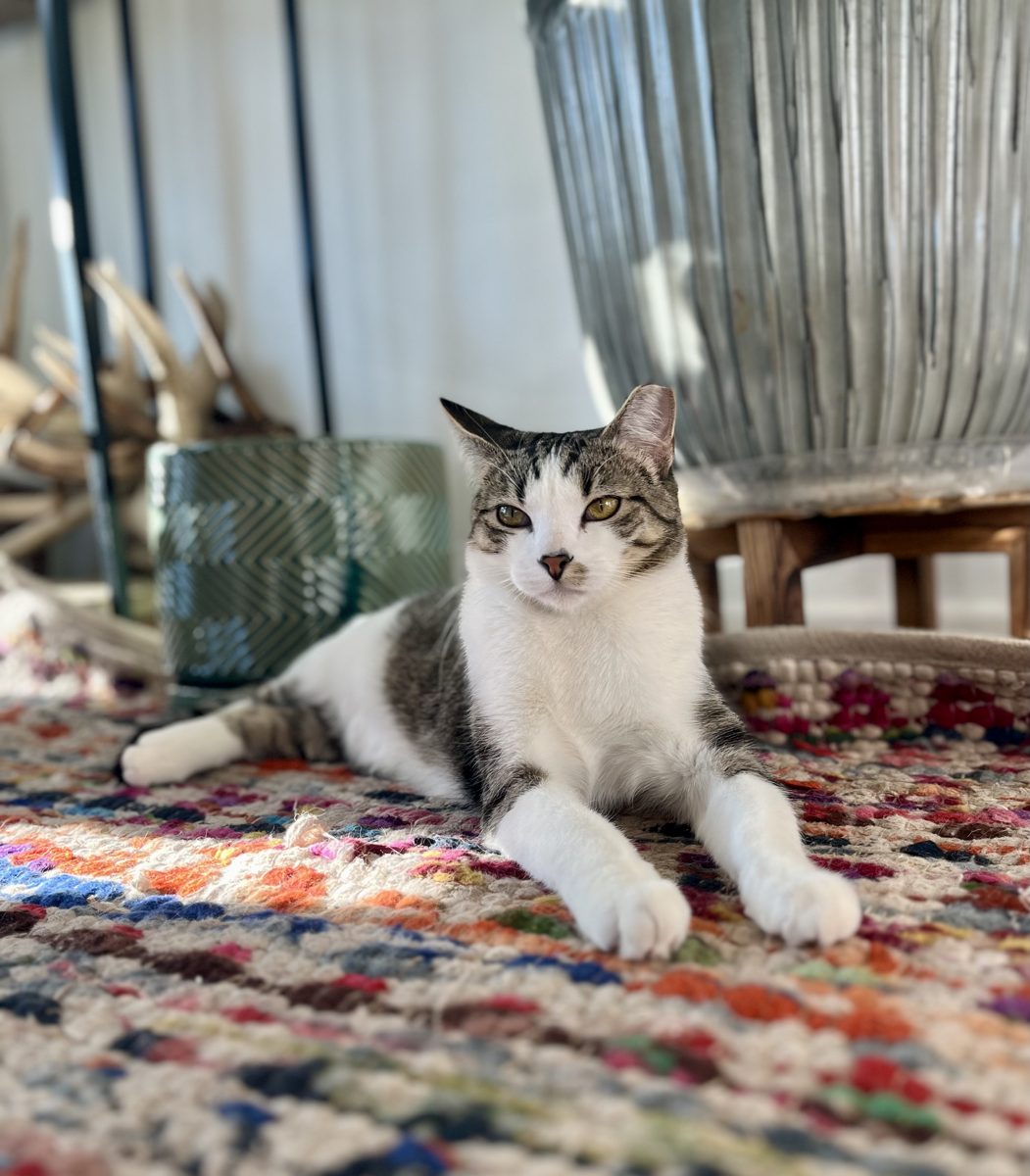
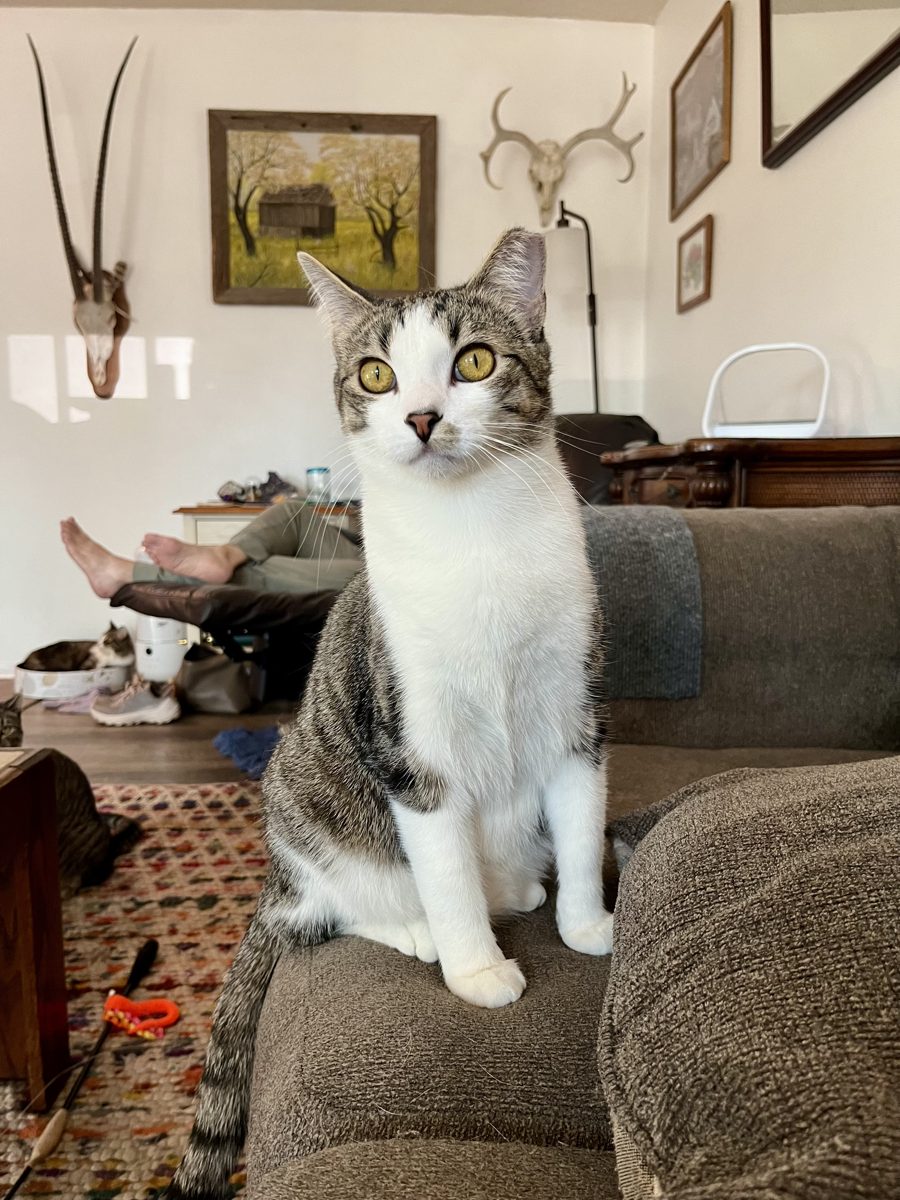
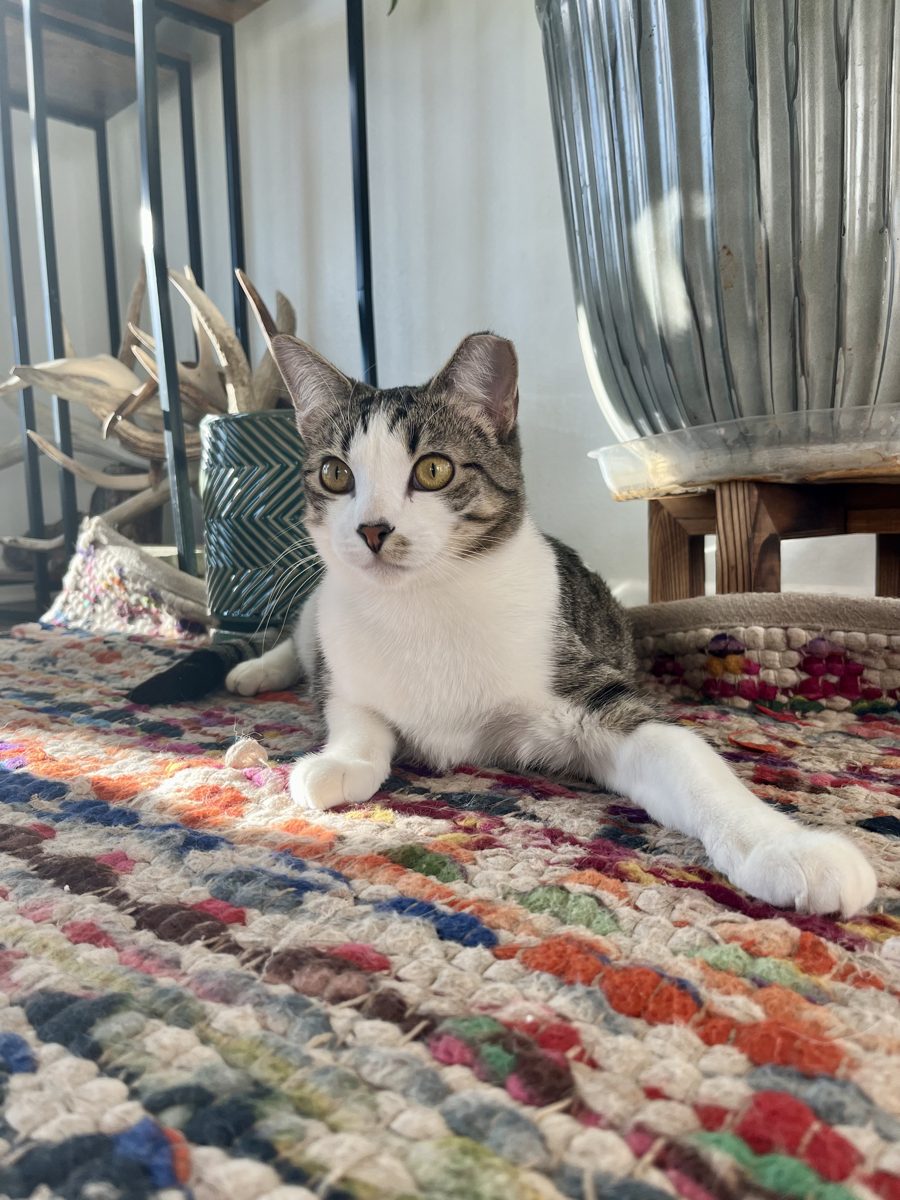
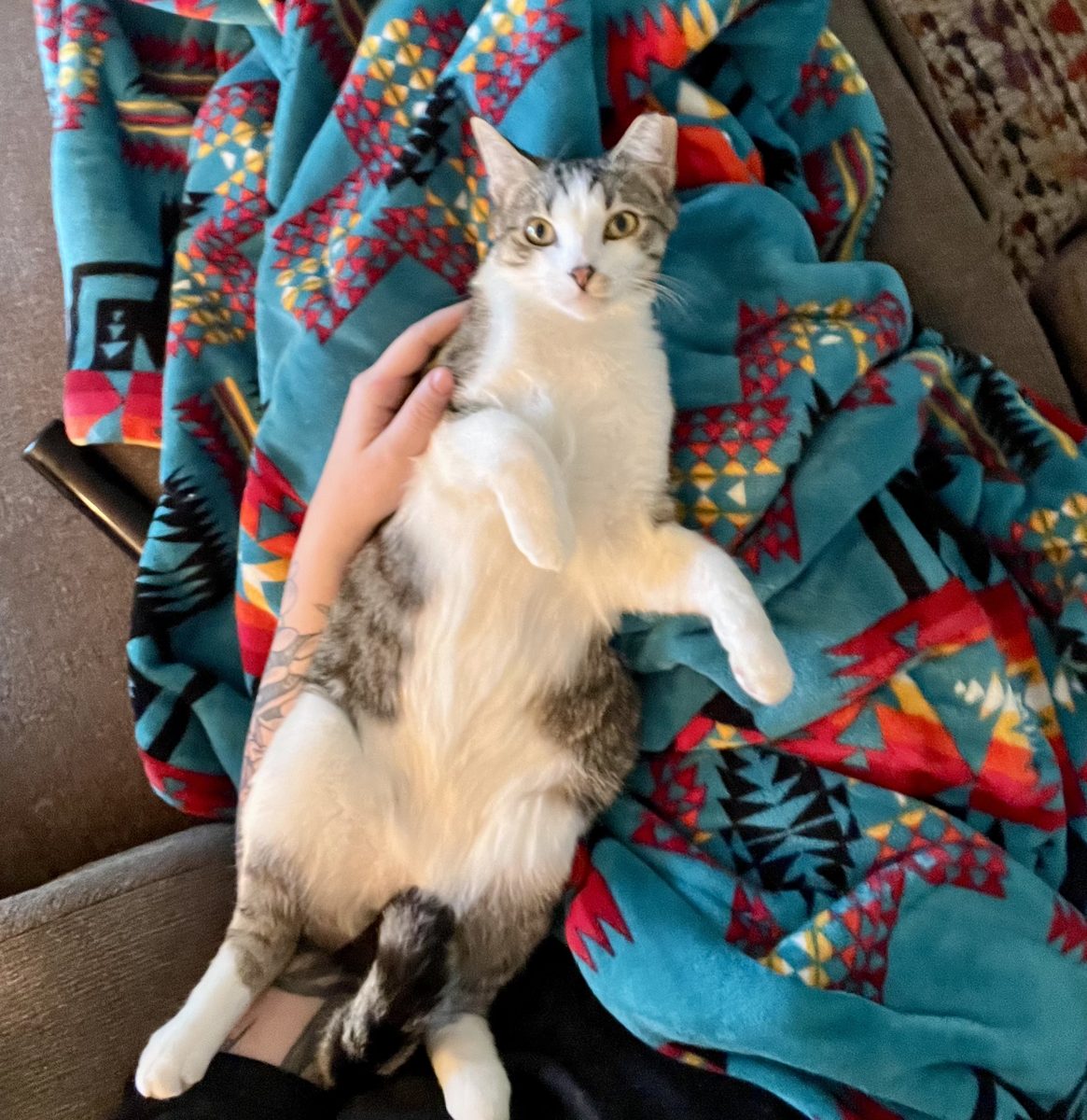
In memory of Willow · 2025 – April 27, 2026
A little cat with a heart that needed more than most, and far more love in it than it had room for. Willow's Fund helps cats get the heart care that can change their story.
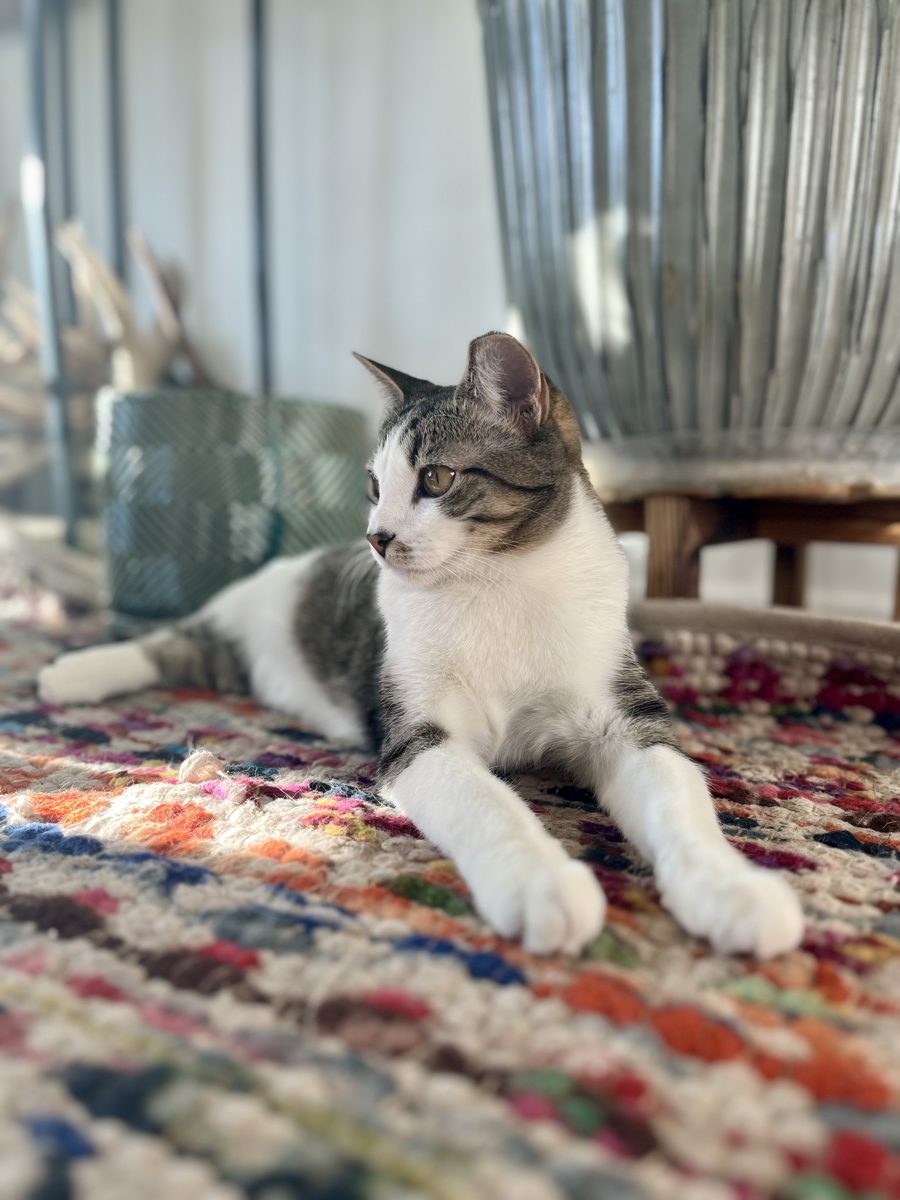
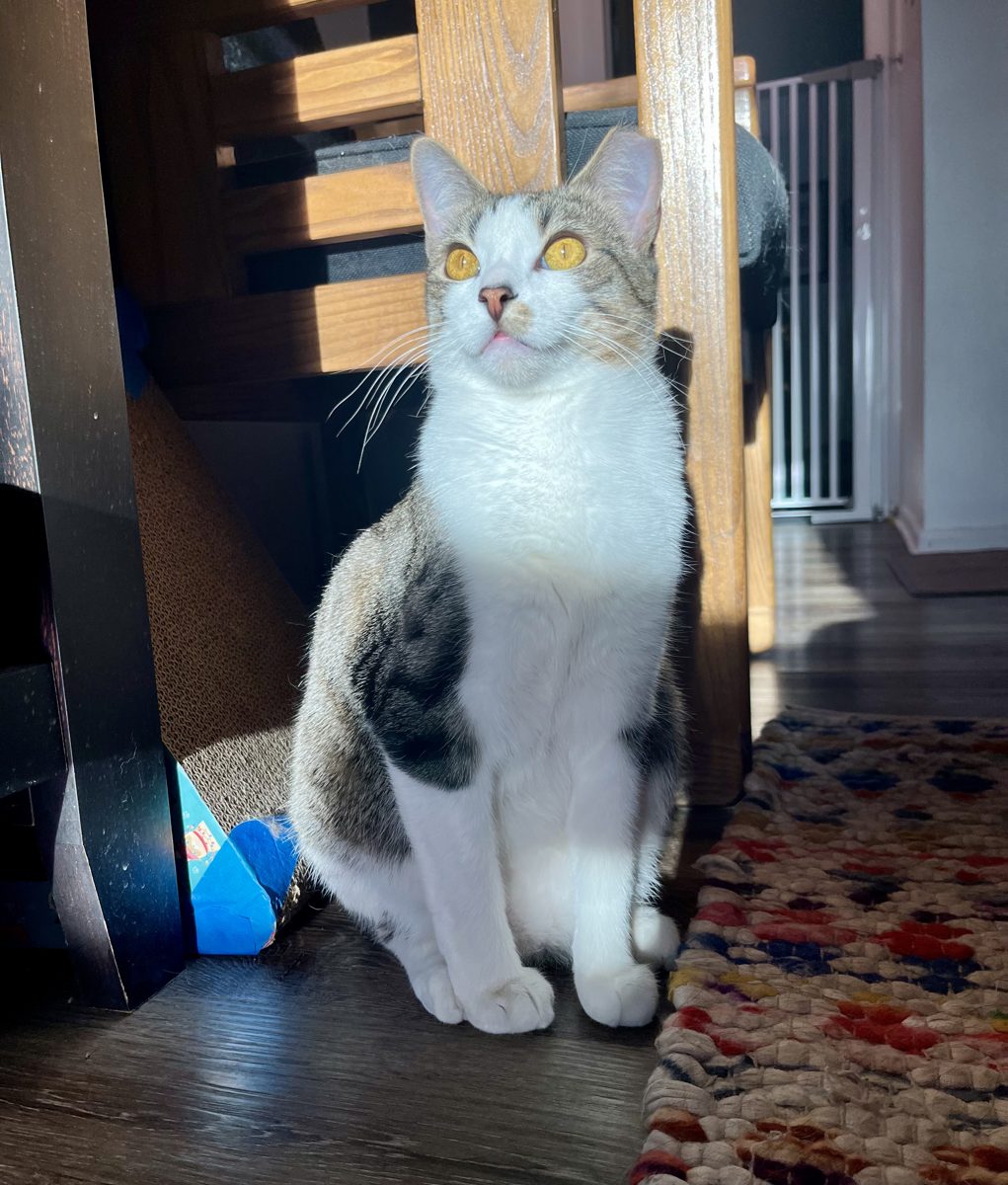
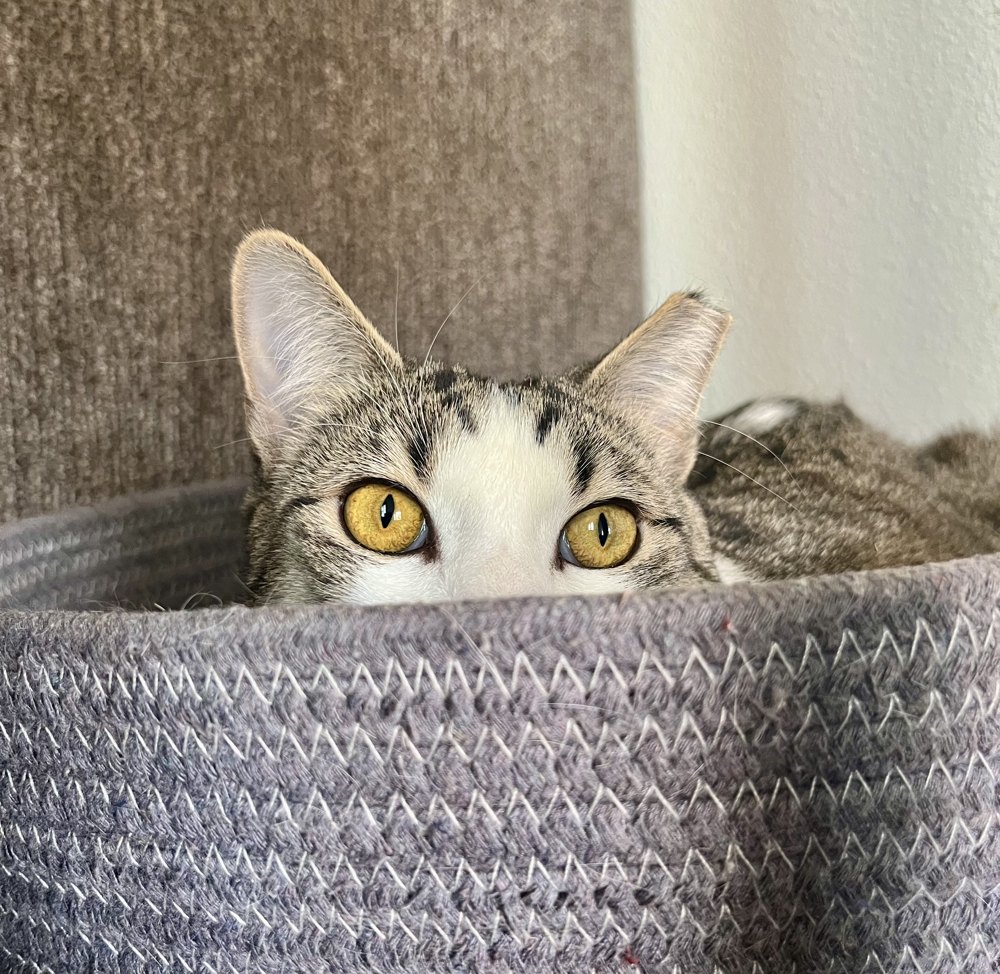
Give to help heart cats in needWillow started out as a stray, one of countless kittens born outdoors around Laramie, scooped up through a trap-neuter-return effort in the summer of 2025. He was small, tabby-and-white, with enormous amber eyes and a voice made of tiny squeaks.
At the routine visit where he was neutered and vaccinated, a veterinarian heard something his size and his energy hid completely: a loud heart murmur. Gem City Veterinary here in Laramie took a closer listen and sent him on to the cardiology team at Colorado State University in Fort Collins. There, a heart ultrasound, an echocardiogram, showed his heart wasn't built quite right. Part of his mitral valve was being pulled into the path of blood leaving his heart, creating an obstruction, and the heart muscle was thickened. It looked like hypertrophic cardiomyopathy, the most common heart disease in cats, though his cardiologists couldn't yet tell whether it was true HCM or a valve that had formed abnormally. His heart, in short, had several things going on at once. The reassuring part: the chamber that matters most was still normal in size, and his short-term outlook was good. They started him on a heart medication and planned to recheck him in a few months to learn more. Willow didn't make it to that recheck, so some of his story we'll never know for certain.
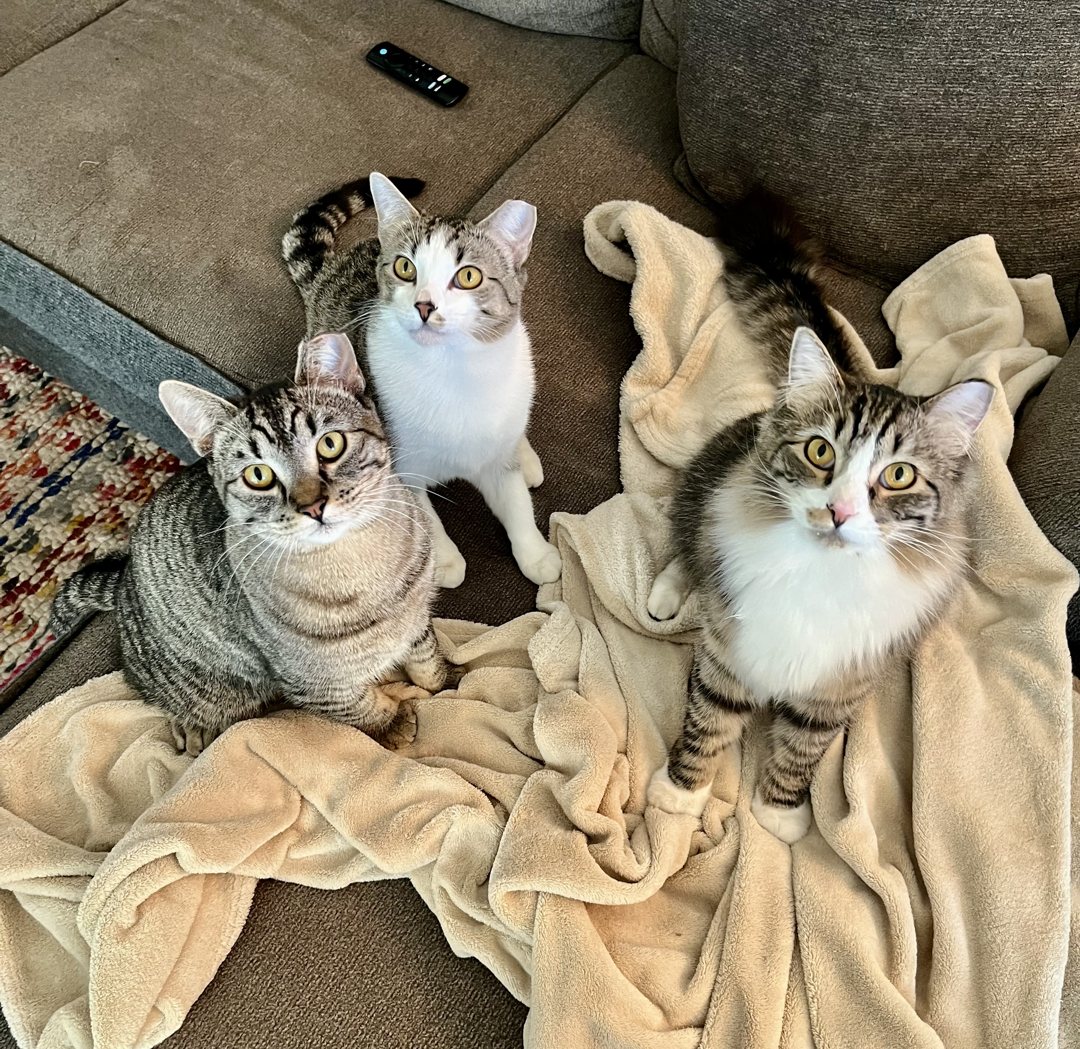
A heart condition can make a cat all but unadoptable. Most people don't go looking for a kitten with a known heart problem. But the family that had already taken in his brothers, one of whom turned out to have a heart condition of his own, less complex than Willow's, wanted to give him a home too. LAWS waived his adoption fee, and the family named him Willow, to go with his brothers Oakie and Alder: a trio of trees. They knew exactly what his heart might do, and they chose him because of who he was, not in spite of it.
Willow got what every cat deserves: a warm lap, sunny windows to watch, and someone who treasured the ordinary days. His heart gave out on April 27, 2026, sooner than any of us wanted. The love in it never did.
"He melts like a liquid onto your lap, content to have his soft fur petted. He pauses every once in a while to hold your gaze with his big, amber eyes that say: I love you so much… We never know how much time we have with our pets, but with Willow, in a way we are lucky: we knew to treasure every moment we got with him."
From Willow's adoption story, written by LAWS
Hypertrophic cardiomyopathy, or HCM, thickens the muscular walls of a cat's heart. A thick muscle sounds strong, but here it's the opposite: the walls grow stiff, the pumping chamber shrinks, and the heart can no longer relax and fill properly between beats. In Willow's case a valve was also pulled into the path where blood leaves the heart, creating the turbulence you can hear as a murmur. It's just one of the heart conditions that can hide inside a cat who looks perfectly healthy.
Roughly one in seven outwardly healthy cats has HCM when screened. It's the most common feline heart disease. And it isn't only purebreds; ordinary house cats get it too.
Many cats with heart disease show no symptoms, sometimes not even a murmur. The first sign is too often a sudden crisis: trouble breathing, a blood clot, or sudden loss.
The only way to truly know is an echocardiogram, a heart ultrasound by a cardiologist, like the team at CSU. It's the test that turns "a murmur" into a real, treatable diagnosis.
Heart disease has no quick cure, but caught early it can often be managed well with the right medication and monitoring, giving a cat a good, long life.
To learn more about feline HCM, see the Cornell Feline Health Center.
With heart disease, timing is everything. A cat whose heart is checked early, before a crisis, often has real options: the right medication, careful monitoring, and a good quality of life for a long time.
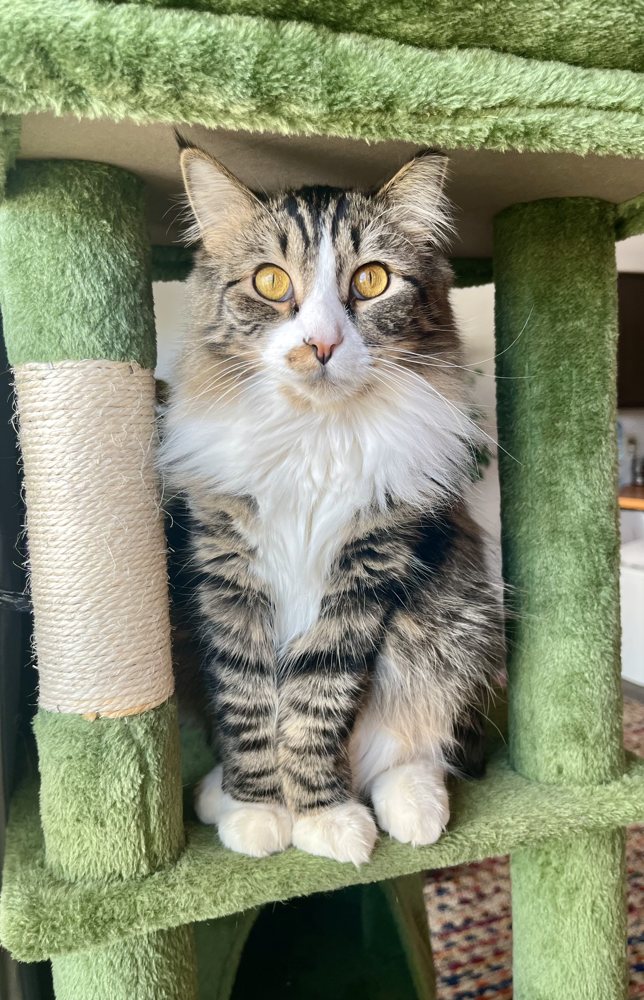
Willow's two brothers, Oakie and Alder, also have heart defects. Oakie's is minor, monitored with annual bloodwork. Alder's is thought to be more like Willow's. Both Alder and Willow were started on a beta blocker, atenolol, in the hope of making it easier for their hearts to pump. Willow didn't make it to his follow-up. Alder did, and his heart showed a major improvement on the medication.
Same litter, the same fragile hearts. For Alder, the difference was catching it in time.
Every cat is different, and Alder's outcome is his own. What his story shows is what becomes possible when a cat's heart is checked early enough to act, and that early diagnosis depends entirely on the echocardiogram that finds it.
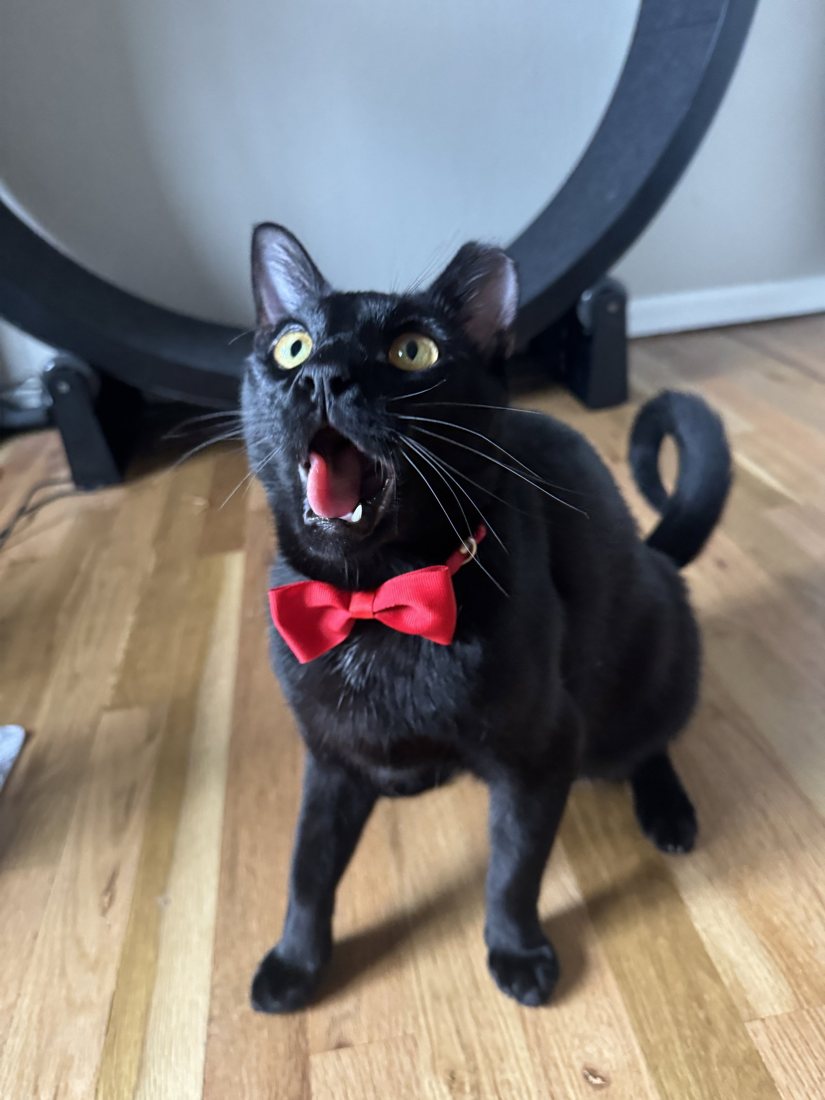
Hex Thunder earned his name by being completely unbothered by thunderstorms. He just makes his own rumbles running on his cat wheel. He's a Laramie favorite: chatty, dapper, and, as his foster family put it, "one of those cats you suspect might be a person stuffed in a tiny fur suit."
Hex was also born with congenital heart problems. They've been largely repaired with surgery, and today he takes a twice-a-day heart medication without a fuss, and is otherwise healthy, rambunctious, and thoroughly adored.
Hex is exactly the cat Willow's Fund is for, and exactly what becomes possible when a cat's heart gets the care it needs.
Most of what veterinarians know about treating heart disease in pets comes from dogs. Canine hearts have been studied for decades, with far more research, funding, and clinical trials than cats have ever had. Feline cardiology is catching up, but it needs something only time and care can build: more cats who get diagnosed, treated, and followed over time.
Every cat who gets a real cardiac workup adds to what we understand about feline hearts, and helps the next cat get a better answer. By giving cats like Willow the diagnosis and care they need, Willow's Fund helps more than one cat at a time. It helps build the knowledge that leads to better treatments for all of them.
Willow's Fund is for cats' hearts. It's a partnership between the Laramie Animal Welfare Society and the cardiology team at Colorado State University, the same team that diagnosed Willow, to get cats with heart disease to the moment that changed everything for Willow's brother Alder: a real diagnosis, early enough to matter, and the care that follows.
A stethoscope check is affordable, but it misses most heart disease. The test that actually finds and grades it, an echocardiogram by a cardiologist, costs more than many shelters spend on a cat's entire care. That's the gap this fund closes:
Help the next cat with a fragile heart get found in time, and get the care that gave Willow's brother Alder a future.
Your gift goes to the Laramie Animal Welfare Society in Willow's memory and supports the feline heart care this fund is for, a partnership with the cardiology team at Colorado State University.